
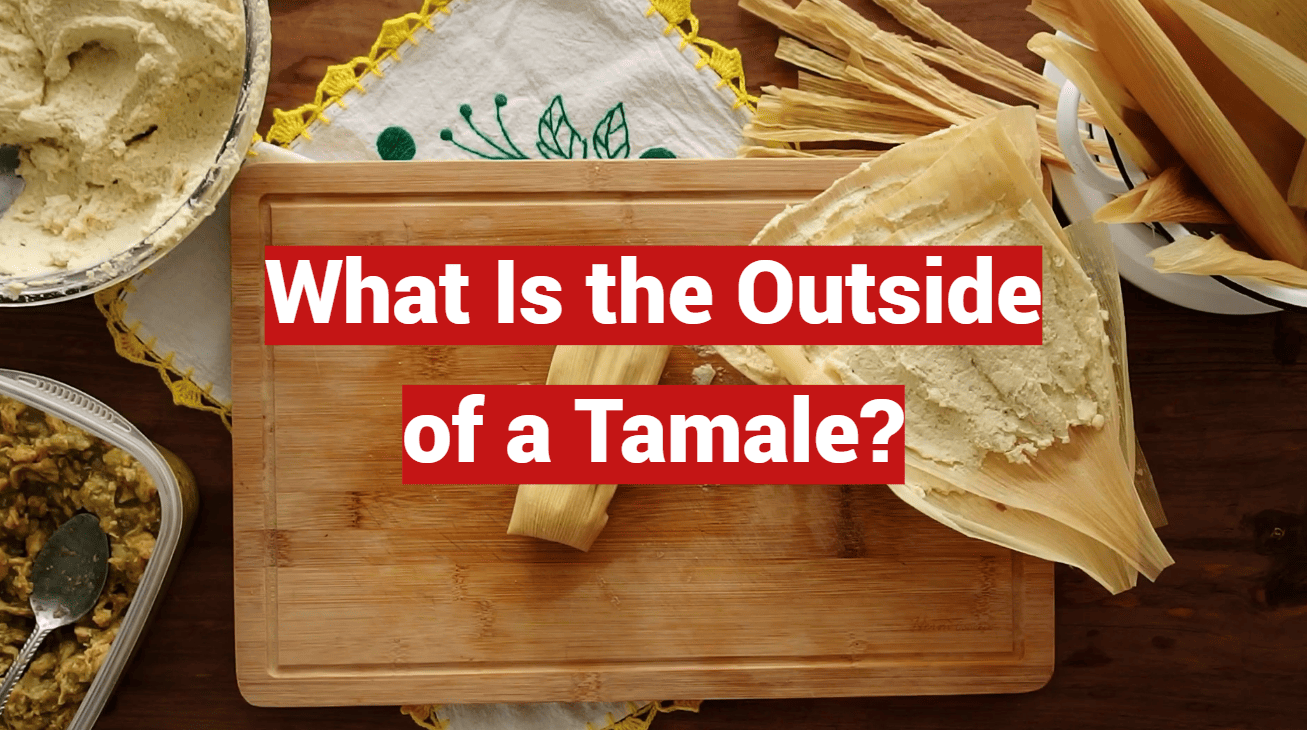
A first-time eater may pause with the whole wrapped item in hand, unsure where the food ends and the wrapper begins. The outside is a cooking wrapper, and you generally remove it before eating. Masa is seasoned corn dough that forms the edible body.
Knowing what to unwrap makes the first bite less awkward, especially when you are sharing food with people who already know the routine. You can use your hands or a fork once the wrapper is off. The main thing is to tell the covering apart from the soft masa and filling.
The wrapper is usually set aside, not eaten. A closer look at its material will help you recognize what to remove.
Key Takeaways
- The outside is a cooking wrapper.
- Masa is the edible body.
- Remove the wrapper before eating.
- Clean hands or a fork both work.
- Identify the wrapper by its material.
What Is the Outside of a Tamale?
In the United States, the outside you are most likely to see is a corn husk. Most often, this pale, fibrous covering wraps around the masa and filling, then comes off before the food is eaten. The outside is a wrapper, not an extra layer of dough.
A corn husk is a cooking wrapper around the edible tamale, not part of its dough.
For anyone asking “what is the outside of a tamale in America,” corn husks are the familiar answer. The husks create a tidy package around the ingredients, though not every tamale uses the same material. Wrapped corn husks can look dry and papery before cooking, then soften as the food steams.
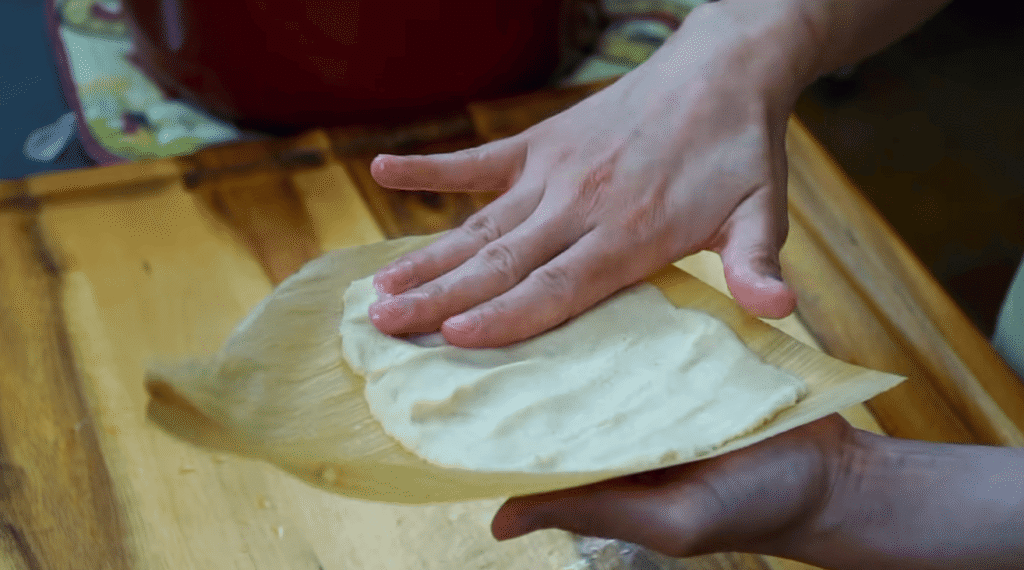
Corn husks are common in the United States
Corn husks are common in Mexico and parts of North America, as well as in many U.S. kitchens and restaurants. A husk forms a close covering around the masa and filling without becoming another edible layer. You may see one folded over the ends or tied to keep the package closed.
The husk is a practical way to hold the contents together while the tamale cooks. Its pale color and narrow shape make it easy to recognize on a plate. If you are new to the dish, treat the entire husk as something to peel away.
Banana and plantain leaves are regional alternatives
Some regional styles use a banana or plantain leaf instead of corn husks. Banana leaves are used in southern Mexico, including Oaxaca, and in Central America. A broad green leaf looks quite different from a small, pale husk, but both serve as a covering around the masa and filling.
There is no single wrapper shared by every region or household. The leaf may be wider, darker, or smoother than the husk, and its shape can change how the package looks. Once you recognize the wrapper, it is easier to focus on the edible tamale inside.
What Is a Tamale Made Of?
A tamale is an edible pocket of corn dough with a filling inside. The dough is called masa, and it forms the soft body around the filling. In simple terms, this traditional Mexican dish brings seasoned corn and other ingredients together in one package.
Masa forms the edible body
Masa is corn dough, often mixed with fat such as lard or vegetable shortening and seasoned. The mixture should hold together as a soft, spreadable dough rather than crumble like dry cornmeal. Once cooked, masa is tender and substantial, making it the main part of the food.
Recipes and household methods vary, so the exact amount of fat and seasoning can differ. The masa is still the edible body whether it is lightly seasoned or richer. It surrounds the filling and gives each bite its corn flavor.
Fillings range from savory to sweet
Common savory fillings include chicken, pork, cheese, vegetables, and chiles. A filling might feature chicken with salsa, or pork seasoned with spices. Cheese can be paired with vegetables or chiles, while some versions use several ingredients together.
Sweet tamales may include chocolate or fruit. The filling changes the flavor, but the basic structure stays familiar: masa around something savory or sweet. If you search “tamale meaning in English,” you are looking for the name of this filled masa dish.
In Spanish, one is a tamal, while more than one are tamales; English commonly uses “tamale” for the dish. Tamales have Indigenous Mesoamerican roots and served as portable food, as well as food used in ceremonies. With the components clear, the next practical question is how to unwrap and eat one.
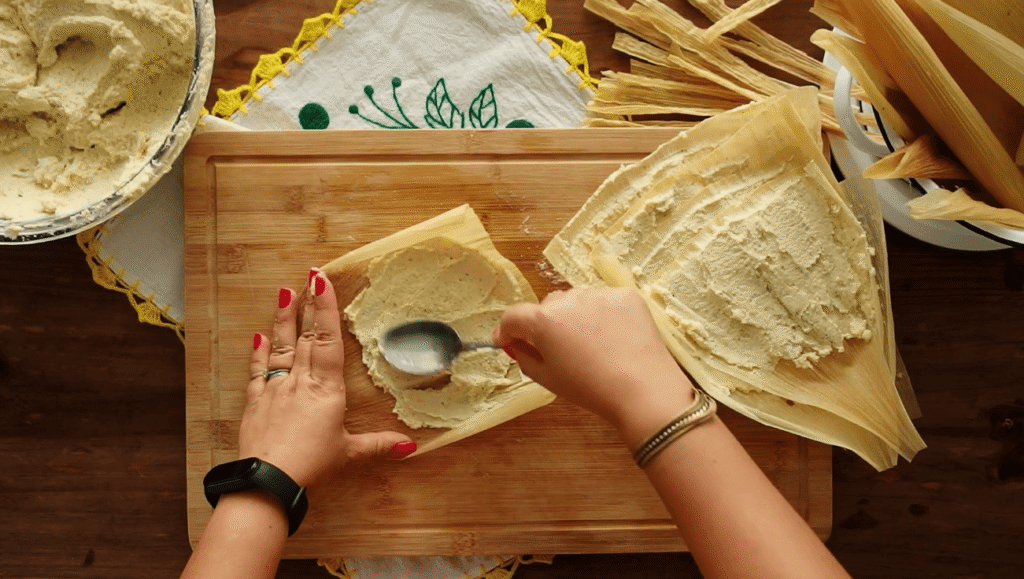
How Do You Eat a Tamale for Beginners?
If a tamale arrives still wrapped, start by peeling back the covering rather than taking a bite through it. Remove the corn husk instead of eating it. If you are asking “do you eat the corn husk on a tamale,” the answer is no: swallowing one may cause choking or an upset stomach.
- Peel the wrapper back and remove it from the plate.
- Check that the masa is soft and the filling is revealed.
- Eat with clean hands, or use a fork on a plate.
- Add salsa or another topping if you like.
A properly steamed corn husk should peel away easily. Plantain leaves are technically edible, but people usually remove them too. A wrapper that sticks does not, by itself, prove that a particular cooking mistake occurred.
You can eat the masa and filling in bites, mixing them together or tasting each part separately. A fork is handy if the tamale is very soft or topped with salsa. Clean hands work just as well when you want a casual meal.
Keep the removed wrapper off your fork and away from the bite you are about to take. The wrapper has a useful job before serving, even though it is not part of the meal. That job starts in the steamer.
Why Do Tamales Need a Wrapper During Cooking?
During steaming, the wrapper acts like a loose mold around the masa and filling. As the masa sets, the corn husk or leaf helps contain the ingredients and keep the tamale in shape. The wrapper also helps the food retain moisture for a tender texture.
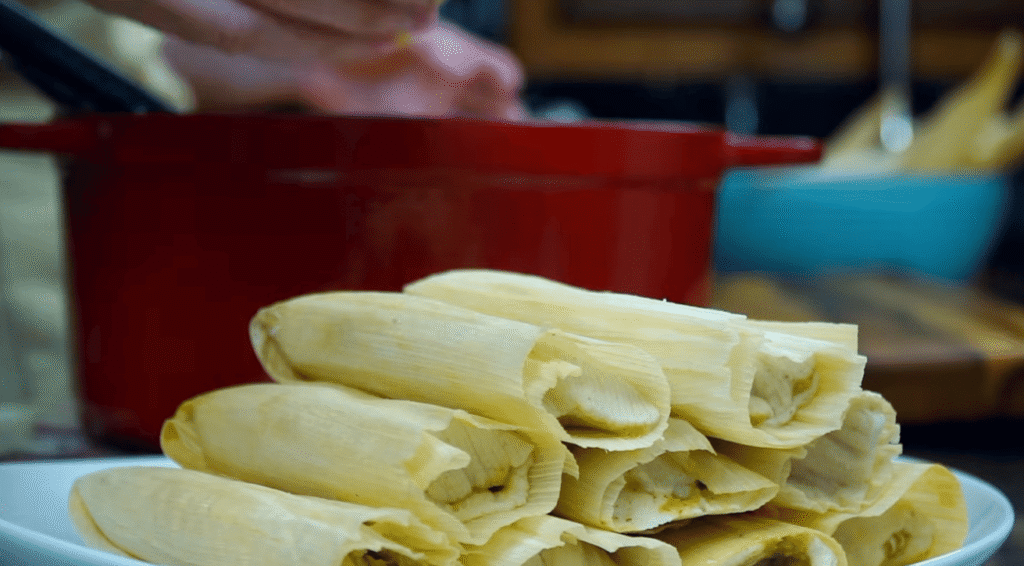
The wrapper holds the shape as masa sets
Soft masa can spread or shift before it cooks through. A wrapper supports it while the filling stays in place, helping the finished tamale hold together when lifted from the steamer. It works as a cooking aid, not as an edible dough layer.
The covering does not need to seal every edge tightly. It mainly keeps the masa and filling gathered in one package as heat firms the dough. That support is useful whether the tamale is narrow or broad.
Steam helps keep the masa tender
Steam surrounds the wrapped food during cooking. The covering helps hold moisture close to the masa, which supports a tender texture instead of letting the outside dry out. The water in the steamer heats the package, while the wrapper helps the contents stay together.
Corn husks can add a subtle earthy aroma and flavor. That note is gentle, and it does not mean every wrapper gives the masa the same taste. A leaf wrapper may affect the aroma differently, while spices in the filling bring their own flavor.
Once cooking is complete, the covering has done its work. You can set it aside and serve the masa and filling as the meal. A few simple sides or toppings can complement the finished tamale without being required.
What Goes Well With Tamales?
A chicken tamale with salsa and beans is an easy starting point for a full plate. Choose a side that suits the filling, and add toppings only if you want them. Tamales can also be eaten on their own; no pairing is required.
- Refried or charro beans make a creamy, hearty side.
- Mexican rice adds a savory accompaniment to the masa.
- Salsa or sour cream works as an optional topping.
- Atole is a warm, sweet drink to serve alongside the meal.
The filling can guide your choices. A spicy pork tamale may suit a cooling spoonful of sour cream, while salsa can add brightness to chicken or cheese. You can also skip toppings when the filling already has plenty of flavor.
Beans and rice make the plate more filling, but a single tamale can be satisfying on its own. Some cooks serve salsa on the side so each person can choose how much to add. Personal taste matters more than following a fixed pairing rule.
Keep the sides simple if the tamale has a rich filling. A small serving of rice, beans, or sauce can round out the meal without covering up the corn and filling. From serving a cooked tamale, you can move on to making and keeping a batch at home.
How Do You Make and Store Tamales?
For a first batch, begin by softening the dried husks before mixing and spreading the masa. Purchased husks need soaking, not making from scratch. An 8-ounce package of dried corn husks can soak in hot water for 30 minutes.
Soak the husks and prepare the masa and filling
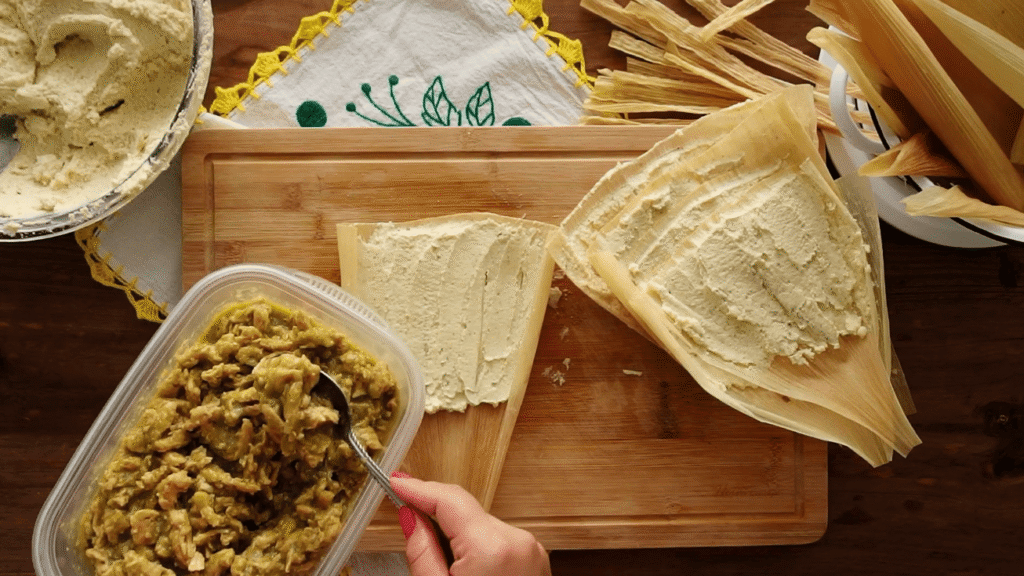
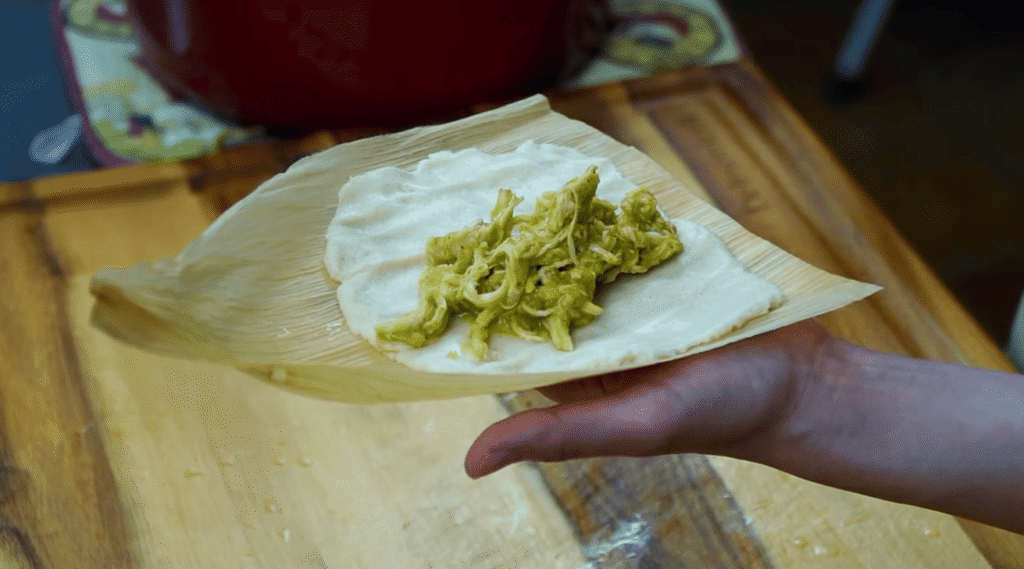
While the husks soften, prepare the masa and cook a filling such as chicken, pork, or cheese. Spread a layer of masa over each softened husk, then add a modest amount of filling near the center. Leave enough room to fold the husk around the food.
Fold the sides over the filling and fold the narrow end up to make a neat package. A recipe for this method yields 24 tamales. For a first try, keep the filling amount modest so the masa can surround it and the package can close.
Wrap, steam, cool, and store the batch
Arrange the folded tamales in a steamer and cook them for 45 minutes to 1 hour. A cooked tamale is ready when the masa is firm and the husk pulls away cleanly.
Look for firm masa and a husk that pulls away cleanly to tell when a tamale is ready.
Let cooked tamales cool before storing them. Keep them in the refrigerator for up to 5 days, or wrap each one individually and freeze them in a freezer bag for up to 3 months. Individual wrapping makes it easier to take out only the number you need.
When you want to serve a frozen tamale, thawing and reheating instructions depend on your recipe and kitchen method. Soaking purchased dried husks is the preparation step; cooks do not make the husks themselves. You can make a batch at home or try a ready-to-eat tamale, following the same rule about its wrapper.
Conclusion
The easiest rule to remember is to remove the wrapper before eating the masa and filling. Corn husks and leaves cover the food during cooking, while the soft corn dough and its filling are the parts to enjoy.
That distinction makes trying a new tamale simple, whether you are tasting familiar flavors or exploring a food tradition for the first time. Add a favorite salsa if you want, but taste the filling before deciding it needs a topping. Unwrap a tamale, set the wrapper aside, and taste the filling before choosing a topping.