
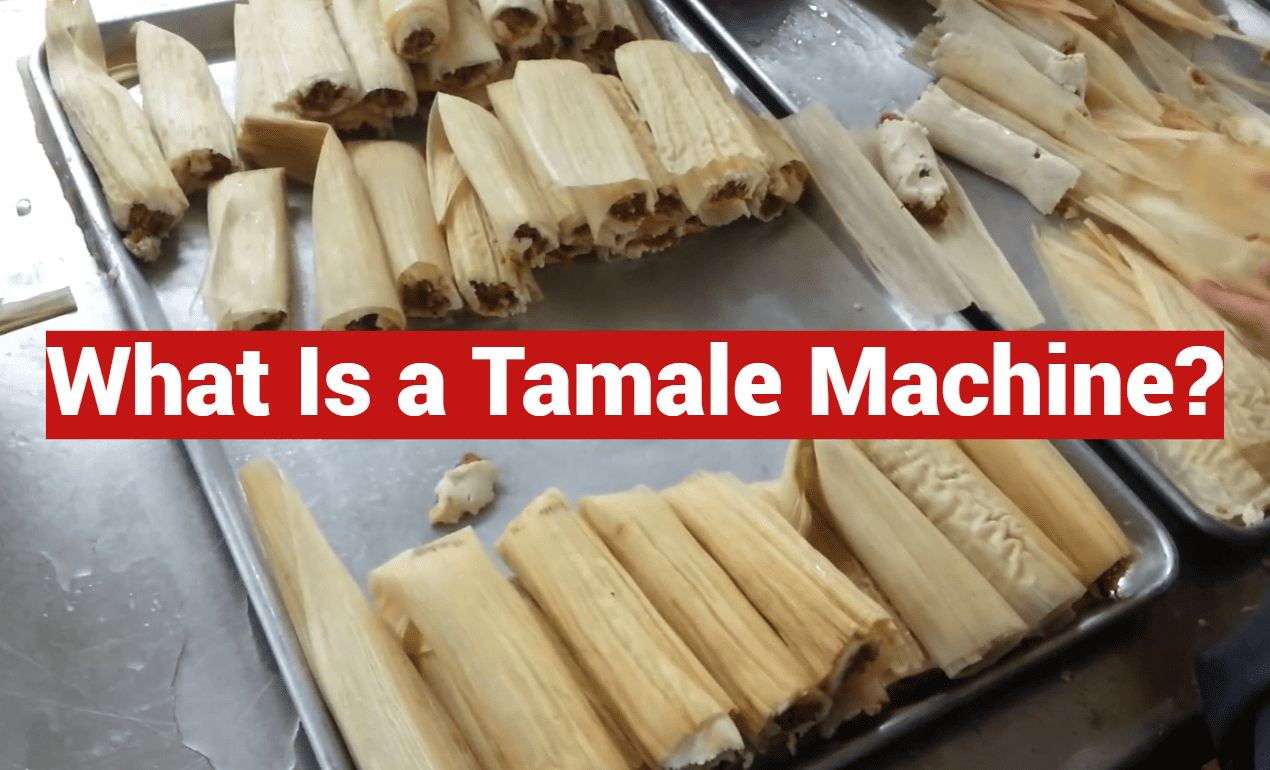
Mexican restaurants across the United States now serve over 4.2 billion tamales annually, creating an unprecedented demand for efficient production methods that traditional hand-rolling cannot satisfy.
This specialized equipment transforms how commercial kitchens approach authentic Mexican cuisine. Instead of hours spent manually preparing each individual item, these innovative systems streamline the entire process. They represent a significant advancement for food businesses seeking to scale their operations while maintaining authentic flavors.
The growing popularity of traditional Mexican dishes drives the need for reliable production solutions. Restaurant owners and food entrepreneurs discover that automated equipment delivers consistent quality while dramatically reducing labor costs. This technology ensures every product meets high standards, batch after batch.
For any operation looking to expand beyond small-scale preparation, this equipment becomes an essential investment. The time savings and product uniformity provide competitive advantages in today’s fast-paced food industry. Modern kitchens rely on these tools to meet customer expectations efficiently.
Key Takeaways
- Automated equipment handles the high volume demand for traditional Mexican dishes
- Commercial kitchens achieve significant time and labor savings
- Consistent product quality ensures customer satisfaction
- Scalable solutions support business growth beyond manual methods
- Modern food production requires efficient, reliable equipment
- Investment in specialized tools provides competitive advantages
- Streamlined processes maintain authentic flavors while increasing output
What Is a Tamale Machine?
Modern food production equipment eliminates the labor-intensive aspects of traditional tamale making. This specialized machinery represents a significant advancement for commercial kitchens needing to scale their operations efficiently.
Defining the Product and Its Purpose
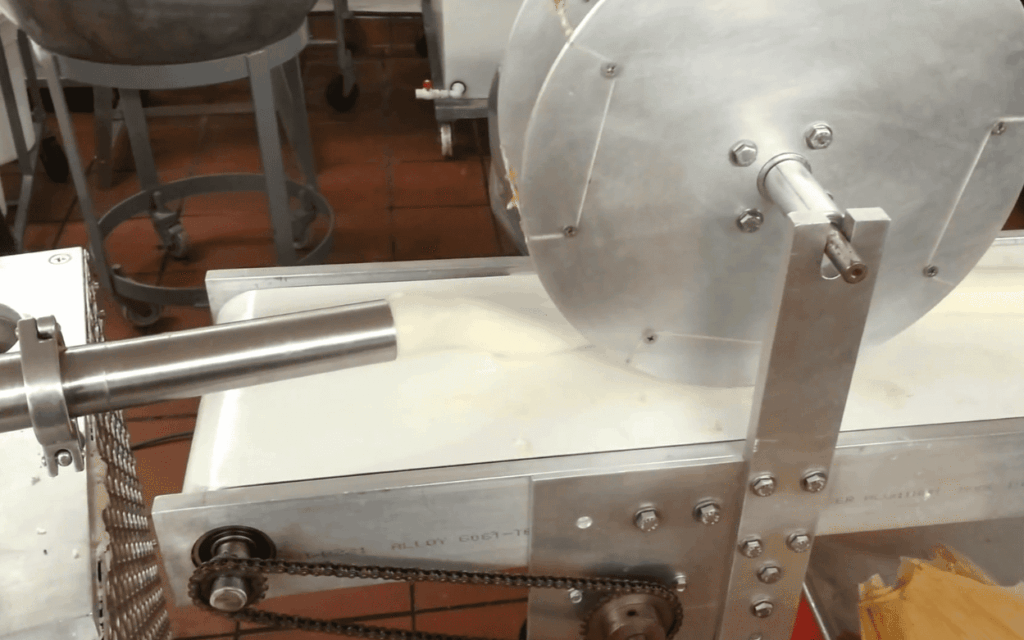
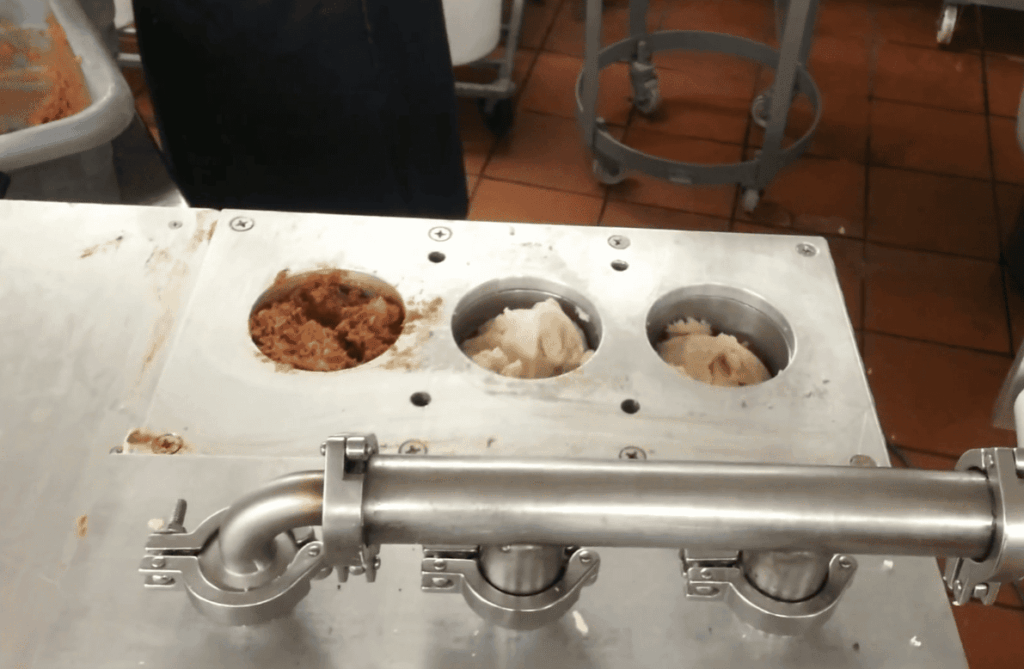
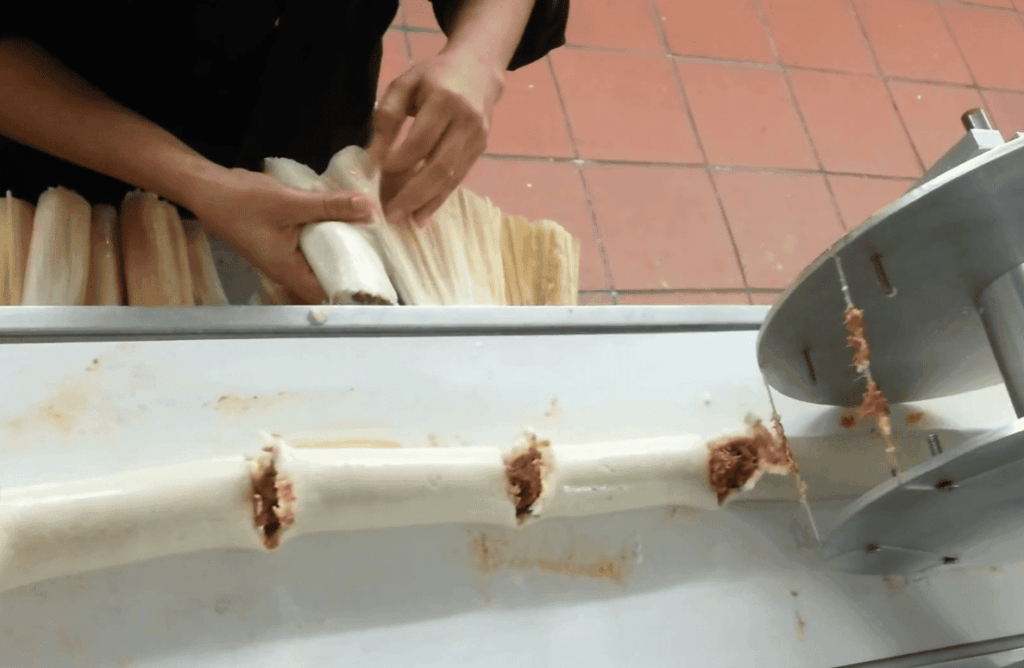
These innovative devices function as automated systems that dispense precise amounts of masa and meat filling onto corn husks. Separate cylinders for each ingredient ensure proper proportion control.
The equipment uses pistons that move up and down inside these cylinders. This mechanical operation creates consistent, ready-to-wrap tamales every cycle.
Manufacturers like El Toro have refined their designs since 1996. Real-world feedback has improved reliability and simplified the entire production process.
Understanding Its Role in Streamlining Tamale Production
A complete cycle typically takes just 2.5 to 3 minutes. This dramatic time reduction transforms what was once a lengthy manual operation.
One person can now manage what previously required multiple workers. The streamlined process makes commercial-scale tamale production feasible for various food businesses.
Consistent product quality becomes achievable with every batch. Proper masa-to-meat ratios ensure customer satisfaction and maintain authentic flavors.
Design and Features of Tamale Machines
Commercial tamale production relies on specialized machinery built with food-safe components and smart design features. These innovative tools combine durability with operational efficiency for busy kitchen environments.
Innovative Construction and Materials
Leading models feature food-grade polycarbonate cylinders and plungers that meet FDA standards. Cast aluminum handles and bases provide heavy-duty construction while maintaining lightweight portability.
Stainless steel components ensure longevity in commercial food settings. The thoughtful material selection prioritizes both safety and performance.
Key Specifications and Capacity Details
The Tamale King TK156 holds 2-1/4 pounds of meat filling and 3-1/2 pounds of masa. Three cylinder options accommodate different production needs.
Smaller diameter cylinders yield higher output counts per cycle. Operators can switch between sizes to match customer preferences.
| Cylinder Diameter | Tamales per Cycle | Ideal Use Case |
|---|---|---|
| 7/8 inch | 50 tamales | High-volume production |
| 1 inch | 40 tamales | Standard restaurant service |
| 1-1/8 inch | 30 tamales | Premium larger tamales |
Ease of Assembly and Maintenance
These machines disassemble in minutes for thorough cleaning. The compact design simplifies storage when not in use.
Self-leveling piston action ensures consistent operation. Minimal maintenance requirements make this equipment ideal for daily commercial use.
Comparing Leading Tamale Machine Models
When selecting commercial equipment for tamale production, two standout models emerge as industry leaders with distinct advantages. Each product serves different business needs and budgets.
Tamale King TK156 “Tio” Overview
The Tamale King TK156 “Tio” offers an economical solution for smaller operations. Priced around $692.50, this manual model provides heavy-duty performance without electric requirements.
This compact equipment includes a 90-day limited warranty covering defects in materials. The warranty applies specifically to commercial food service applications.
El Toro Electric Tamale Machine Highlights
For high-volume production, the El Toro electric tamale machine represents a premium investment at $6,475.00. This free-standing floor model eliminates table mounting needs.
The manufacturer provides a comprehensive 1-year warranty on parts and labor. Customers receive free shipping with orders typically shipping within 2-3 weeks.
Both products serve distinct customer segments effectively. The choice depends on production volume requirements and budget considerations.
Optimizing Tamale Production with Electric & Heavy Duty Machines
The transition from manual preparation to automated systems delivers remarkable efficiency gains for food businesses. These advanced tools transform labor-intensive processes into streamlined operations.
Efficiency and Tamales Per Hour
Production rates demonstrate the power of modern equipment. The El Toro electric model can produce up to 480 ready-to-wrap tamales per hour using the popular 1-inch diameter setting.
Cycle times of just 2-4 minutes per batch replace hours of traditional hand-rolling. This speed allows one person to accomplish what previously required an entire team.
| Diameter Size | Tamales Per Hour | Ideal Production Scenario |
|---|---|---|
| 1.25 inch | 40 dozen | High-volume catering orders |
| 1.75 inch | 20 dozen | Premium restaurant service |
| 1 inch | 30-40 dozen | Standard business operations |
Advantages for Restaurants and Food Businesses
Single-person operation significantly reduces labor costs while maintaining consistent quality. Customers receive uniform products that meet their expectations every time.
Proper preparation ensures optimal machine performance. Masa should be smooth and creamy for proper adherence. Meat should be cooked, chilled, and chopped rather than ground.
These systems support business growth by enabling larger catering orders and expanded menu offerings. The return on investment comes quickly through labor savings and increased order capacity.
Conclusion
For restaurant owners seeking authentic Mexican cuisine production solutions, specialized equipment offers game-changing benefits. These innovative tools transform labor-intensive processes into efficient operations that maintain traditional quality.
Choosing between manual and electric models depends on your business needs. The compact Tamale King suits smaller operations, while the El Toro electric tamale machine handles high-volume production. Consider production capacity, warranty terms, and price when placing your order.
The return on investment becomes clear through dramatic time savings. One person can now accomplish what previously required an entire team. Consistent masa-to-meat ratios ensure customer satisfaction with every batch of tamales.
Beyond the item price, evaluate manufacturer support and service quality. Reliable equipment backed by responsive customer support ensures smooth operation. This investment represents a commitment to both efficiency and authentic food traditions.
Whether scaling up to meet growing order volumes or optimizing current processes, the right equipment choice supports business growth. Quality products and streamlined operations create competitive advantages in today’s food industry.